Julian Alaphilippe is Born to Dare
Thank you, Loulou!
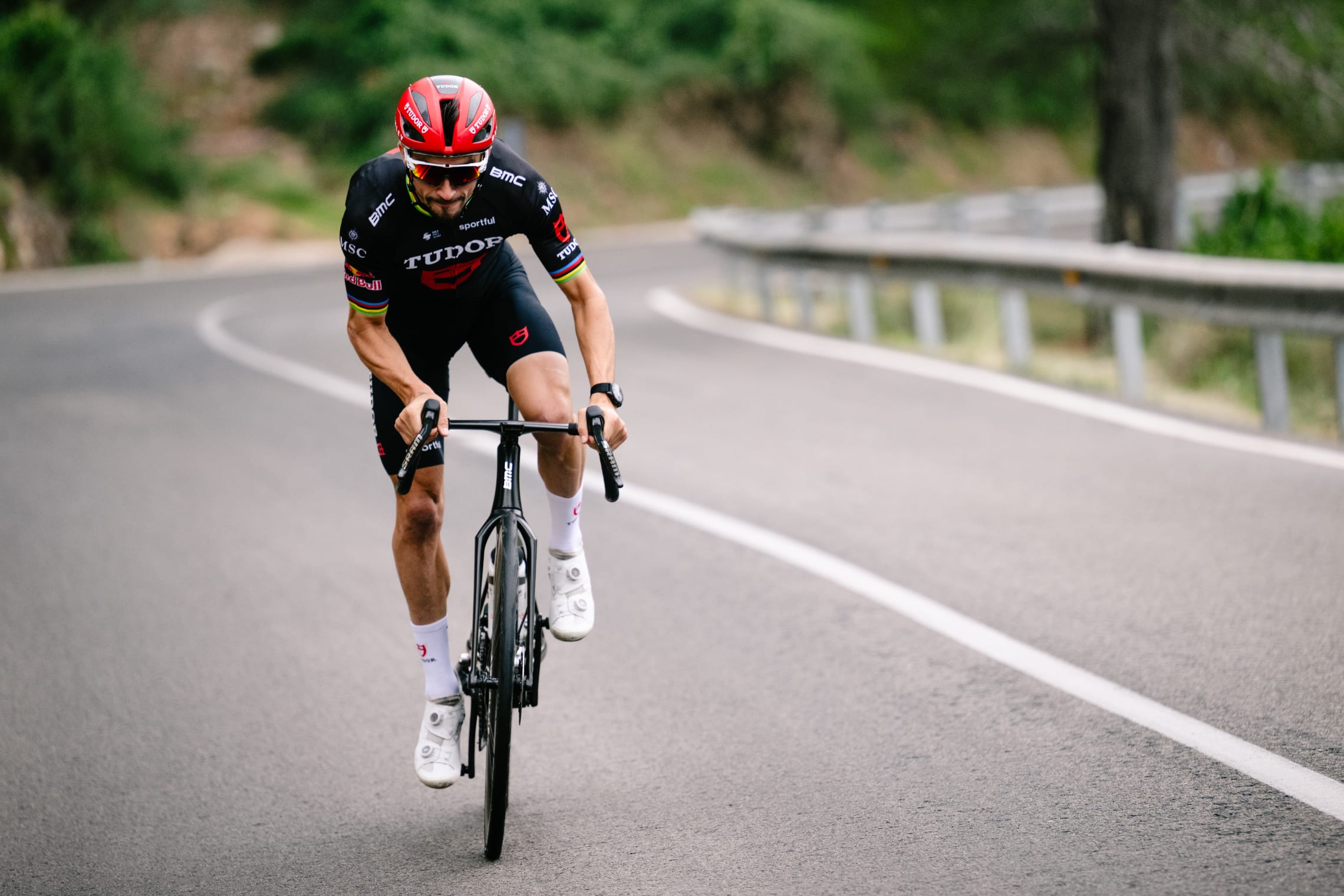
On 21 August 2026, Julian Alaphilippe announced that the race which had defined so much of his life would no longer define every day of it. Double world champion. Winner of cycling’s great Classics. A rider who wore the yellow jersey at the Tour de France for fourteen unforgettable days. And, above all, one of the sport’s most instinctive and beloved competitors.
His decision to retire closes a remarkable professional career, but it does not diminish the force of what came before. It sharpens it. Every attack, every raised arm, every difficult return, every moment in which Julian chose to follow the feeling in his legs rather than the safe option on paper. This was a rider who did not simply compete in races. He animated them.
“I gave everything I had, and cycling gave me everything in return,” Alaphilippe said. “That’s why I can say it with a smile: I’m stopping. Not with sadness, but with immense gratitude.”
That sentence captures the spirit of a career defined by courage, emotion and commitment. It also captures why Julian Alaphilippe belongs so naturally alongside TUDOR: he is, in every sense, Born To Dare.
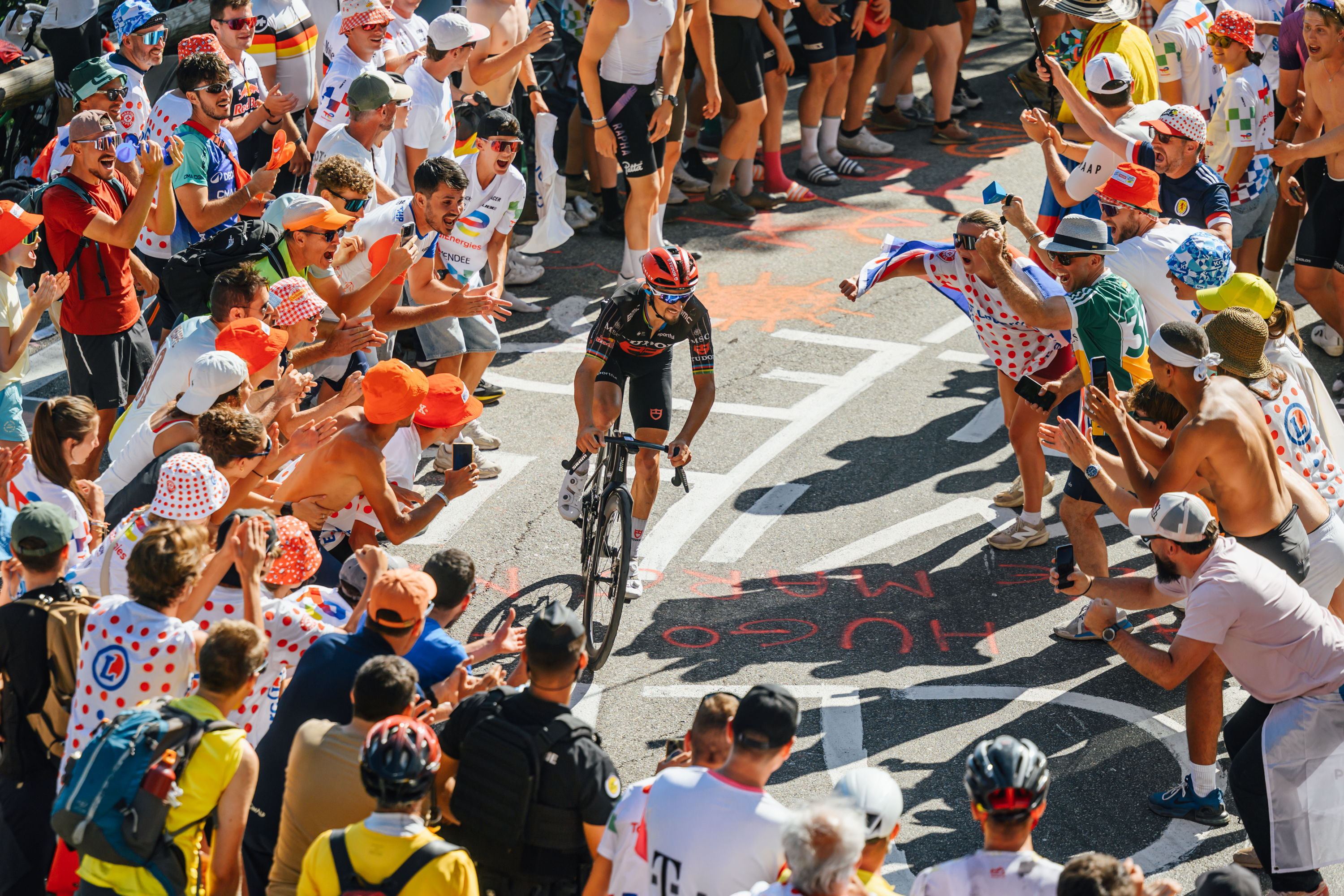
From Saint-Amand-Montrond to the world stage, Alaphilippe never travelled the expected road. He began in cyclo-cross, while also playing drums at musette dances with his father. The path was not preordained; the ambition was built through work, instinct and a willingness to put everything on the line. “None of this was something I was owed,” he reflected. “It was a gift. A gift from many people.”
That gratitude remained visible even at the highest points of his career. In 2019, he won Milan–Sanremo and Strade Bianche, adding to a growing list of victories that already included La Flèche Wallonne and the Clásica San Sebastián. Then came July. At the Tour de France, Alaphilippe took the yellow jersey in Épernay and expected, perhaps, to defend it for only a few days. Instead, he carried it for fourteen. France watched. Cycling watched. The rider in yellow rode with the freedom, flair and defiance that have always been his signature.
“That year was bigger than me,” he said. “When I took the yellow jersey in Épernay, I thought: two days, three maybe. It lasted fourteen.”
The statistics may record the final classification. The memory tells a different story: a nation united behind a rider willing to attack when caution would have been easier.
His two rainbow jerseys confirmed the scale of his talent. In Imola in 2020, he became road world champion, crossing the line and pointing skyward in tribute to his father. It was, he said, “the most personal one.” A year later, in Leuven, he defended the title in front of a vast Belgian crowd, turning an extraordinary achievement into a celebration shared with a country that had become a second home.
Yet Alaphilippe’s legacy is not only a catalogue of victories. It is also found in the valleys: in injury, doubt and the determination to return. After the severe crash at Liège in 2022 — a punctured lung, broken ribs and a fractured shoulder blade — the physical challenge was immense. So was the noise around him. But the response was unmistakably Julian: keep working, keep believing, keep racing with heart.
His 2024 Giro d’Italia stage victory in Fano was proof that he still had it. After 150 kilometres in the breakaway, he arrived alone. “It wasn’t my answer to the critics,” he explained, “but to myself — proof that the flame was still burning.”
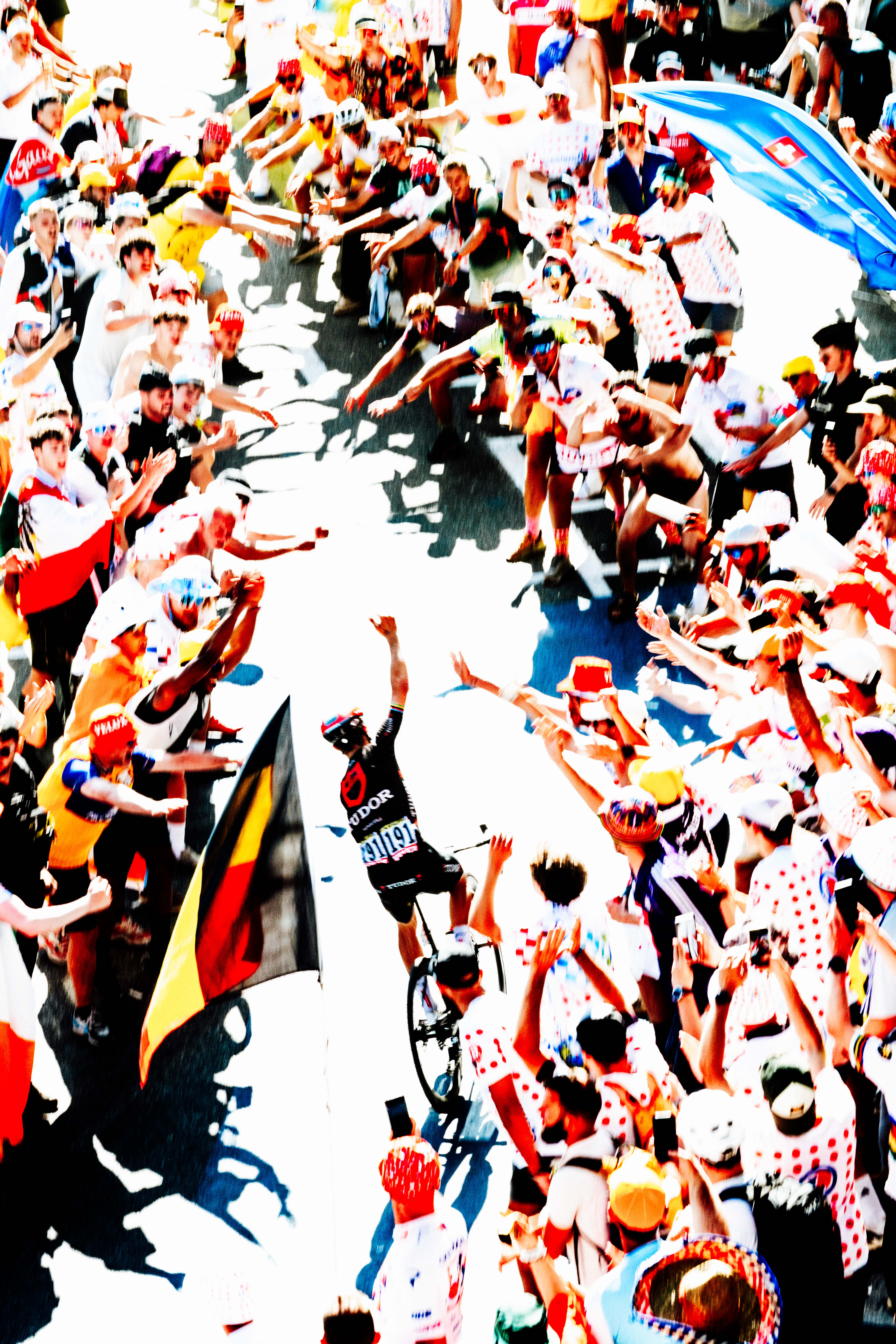
That same spirit came to TUDOR Pro Cycling. Over his final two seasons, Alaphilippe brought not only experience and a champion’s pedigree, but a generosity that enriched the entire team. His value was measured not merely in results, but in the knowledge he shared: how to read a race, when to wait, when to gamble, and how to remain composed when the road refuses to follow the plan.
At the Tour des Alpes, under relentless rain, he demonstrated precisely what leadership can mean. Rather than pursuing personal glory, Julian committed himself fully to the team effort, helping create the opportunity for a teammate to take victory. On a day when visibility was poor and conditions demanded complete trust, he made the decisive choice to ride for another rider. It was an act of selflessness, intelligence and belief in the collective.
At the 2025 Tour de France, he offered another image that will endure. After dislocating his shoulder, he put it back into place and continued racing. To finish third on the stage was extraordinary; to do so after such a setback spoke to something deeper than performance. It was resilience without theater, an instinctive refusal to surrender while there was still road ahead.
His final professional victory in Canada brought the story full circle in its own way: one last triumph from a rider who had spent his career making the difficult look possible. It was not simply a win. It was a reminder of the audacity that made him unforgettable — the sharp acceleration, the perfectly timed move, the joy that followed when risk met reward.
Over those two years with TUDOR Pro Cycling, Alaphilippe also found a new dimension of purpose. “I’ve had the opportunity to give something back: helping younger riders read the race and passing on everything I’ve been lucky enough to learn over 16 years,” he said. “To be listened to and respected by the younger generation is a privilege.”
That is the mark of a true champion. Not simply to leave a record, but to leave others stronger. Not simply to win, but to make the people around you believe they can win too.
TUDOR’s signature is a declaration of identity: #BornToDare. For Julian Alaphilippe, it is not a slogan applied after the fact. It is visible in every chapter of his career — in the attacks launched on instinct, in the setbacks overcome, in the risks accepted, and in the generosity shown to teammates and supporters. He raced with his heart on his sleeve, as he himself acknowledged: “I’d rather lose ten times while attacking than win once because the team car dictated how I should race.”
Now, he chooses a different finish line: time with his family, time with his son, and the quiet satisfaction of a life fully lived in motion. To the fans who stood roadside in France, Belgium, Italy, Canada and beyond, he offered a final thanks: “I hope I gave something back — some thrills, a reason to shout, a smile, a memory shared with your father or your daughter by the roadside.”
He did. Merci, Loulou.